


Meet the Benthic and Limnetic Stickleback Species Pairs
The three-spined stickleback (Gasterosteus aculeatus) is a small, armoured fish commonly found in fresh and saltwater habitats in the Northern Hemisphere. In contrast, the benthic and limnetic stickleback species pairs are only found in several freshwater lakes on the Sunshine Coast of British Columbia.
What’s in a Name?
Benthic – The benthic zone of a lake is the bottom sediments. This is where the benthic sticklebacks spend most of their time, hunting small animals that live there.
Limnetic – The limnetic zone of a lake is the open water column. This is where the limnetic sticklebacks spend most of their time, swimming in schools and eating plankton.
Species Pair – This term refers to the fact that the benthics and limnetics are closely related stickleback species that live in the same lake but look and behave differently.

Limnetics
- Small, sleek, silvery and spiny
- Live in schools in the open water (limnetic zone)
- Have small mouths to eat plankton
Benthics
- Larger and chunkier with smaller spines
- Mottled dark colours helps them hide in shallow waters among plants
- Have larger mouths to eat snails, worms, and insects from the lake bottom (benthic zone)
Where do they live?
Globally, there are three distinct benthic and limnetic stickleback species pairs that are currently known, all of which are found in small lakes on the southwestern coast of BC.
Two species pairs occur on Texada Island: one in Paxton Lake and the other in three interconnected lakes within the Vananda Creek watershed. A third species pair occurs on Nelson Island on the Sunshine Coast.
There used to be two other benthic and limnetic species pairs: one in Enos Lake on Vancouver Island and the other in Hadley Lake on Lasqueti Island. Both went extinct soon after their discover due to the introduction of aquatic invasive species.

Why do they matter?
Global Superstars
Although they may not be well known by the public, the benthic and limnetic stickleback species pairs are known by scientists around the world. The species pairs are a model organism for researchers trying to understand fundamental things about our world, including how new species form and are maintained, how genes evolve and are regulated, and even to better understand human diseases.
Fun Fact
The limnetics and benthics evolved from their common ancestor after the last ice age, about 12,000 years ago, which is so recent in an evolutionary time scale that they are considered one of the youngest species on Earth.
Biodiverse BC
The species pairs are an integral component of the food web in the lakes in which they are found, providing food for native biodiversity including birds, trout, and the endangered western painted turtle. In turn, they help keep their prey populations in check by eating plankton and aquatic invertebrates.
Fun Fact
Like the more famous Vancouver Island Marmot, the benthic and limnetic stickleback species pairs are endemic to BC, meaning they are found nowhere else in the world. They are a “locally made” species and an important part of BC’s natural heritage and biodiversity.
Fascinating Fish!
The stickleback species pairs have remarkable adaptations and behaviours. Visit the Resources Section to discover more about these fascinating fish, such as by playing a stickleback board game or by watching videos of them building nests, guarding their eggs, and fighting off predators!

Threats
Did you know? The Texada Island—Paxton Lake and Vananda Creek—species pairs—are designated as Endangered under the Species at Risk Act (SARA).
The benthic and limnetic stickleback species pairs are currently known from only a few locations, and they are a species at risk, vulnerable to extinction. Invasive species are one of the greatest threats to the stickleback species pairs. Two of the five benthic and limnetic species pairs have gone extinct due to the introduction of aquatic invasive species.
Extinction is Forever
- The Hadley Lake stickleback species pair went extinct soon after an invasive predator, the Brown bullhead (Ameiurus nebulosus) was introduced.

- The Enos Lake stickleback species pair went extinct when signal crayfish (Pacifastacus leniusculus) were introduced. Although signal crayfish are native to B.C., they were not native to Enos Lake. The crayfish impacted the sticklebacks by ripping up aquatic plants and making the water silty, which destroyed their nesting habitat.

Invasive Alert!
Here are some other aquatic invasive species that could harm the stickleback species pairsby eating them, competing with them, spreading diseases, or changing their lake habitat and water quality.
- Largemouth and Smallmouth bass (Micropterus salmoides and M. dolomieu)
- Yellow perch (Perca flavescens)
- Goldfish (Carassius auratus)
- American bullfrog (Lithobates catesbeiana)
- Eurasian watermilfoil (Myriophyllum spicatum)
- Purple loosestrife (Lythrum salicaria)
- Yellow flag iris (Iris pseudacoris)

How Can You Help?
You don’t have to be a scientist to make a difference. The same care and best practices that apply to safeguarding the benthic and limnetic stickleback species pairs also helps to protect the fish, plants, and water quality found in special places wherever you may be. We can all help to prevent the spread of invasive species.
CLEAN off all plants, animals, sand, and mud from your gear.
DRAIN all water from your boat
DRY all parts of your gear completely.
PULL THE PLUG- It’s the law!


Don’t Let it Loose! Many invasive species, including goldfish and eurasian watermilfoil, were once pets that were let loose or came from home aquariums. Never release plants or animals into the wild or use live bait for fishing.

Report any invasive species using the Report Invasives BC app or iNaturalist for iPhone, iPad, and Android platforms.
Join the I Spy and Identify Project on iNaturalist to contribute to Canada’s biodiversity science and protect native species from the impacts of invasive species.
You can also report invasive species by emailing info@bcinvasives.ca, or by calling 1-888-933-3722.
Learn More! Texada Stickleback Species Pairs Resources
Watch
Species at Risk: The Stickleback Species Pair of Texada Island (Video Playlist)
Play
Journey of the Stickleback Species Pair Boardgame
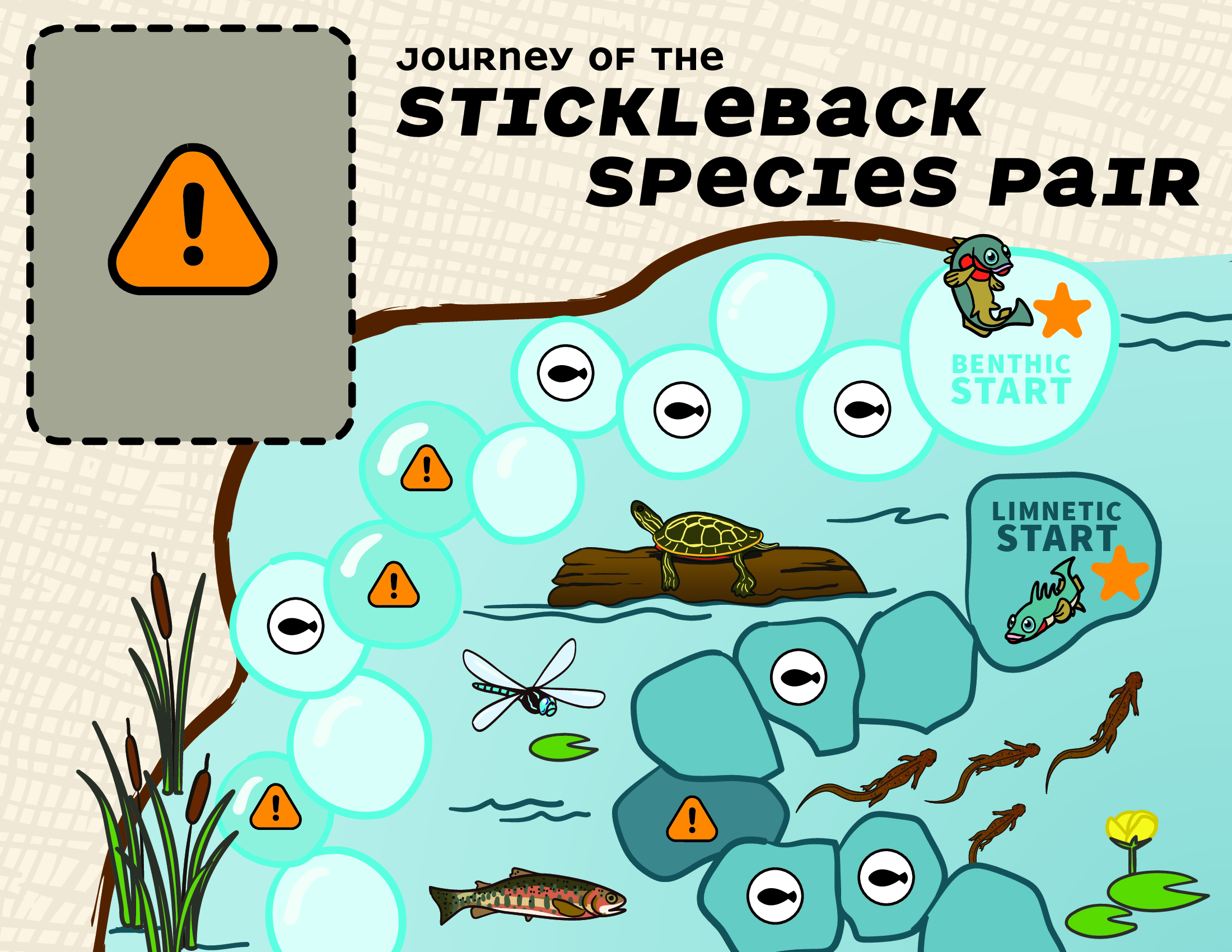
Journey of the Stickleback Species Pair Boardgame – 8.5×11

Journey of the Stickleback Species Pair Boardgame – 11×17
Poster

Texada Sticklebacks: Global Superstars and Local Treasures (Poster)
Read

Factsheet: Texada Island Stickleback Species Pair

Article for youth: Texada Island Stickleback Species Pairs: A Local Fish with Global Importance (Nature Wild Magazine, NatureKids BC)

Protecting Texada Island’s Sticklebacks is a Team Effort (ISCBC News, August 2024)

The Treasure Fish of Texada: Underwater Storytelling with the Amphibiographer (ISCBC News, January 2025)
Colour

Texada Stickleback Species Pair Colouring Sheet

Texada Stickleback Nest Colouring Sheet
Assess Habitat

Benthic and Limnetic Stickleback Species Pair Healthy Habitat Assessment


