


Japanese beetle
About This Species
Japanese beetle (Popillia japonica) is an invasive pest in North America and poses a severe threat to ecosystems, agriculture and horticulture industries. These beetles can feed on over 300 species of plants, including many that are economically and ecologically important. If established in B.C., Japanese beetle could cause significant damage to turf, horticulture and agriculture. Adult beetles emerge in June, when temperatures consistently reach above 21°C, and damage plants by skeletonizing leaves, creating a lace-like appearance. Beetle larvae live underground and feed exclusively on the roots of turf, grasses, and plants leaving patches of brown dead grass in otherwise healthy lawns.
First detected in North America in 1916, Japanese beetle are now established across much of the eastern United States and Canada and have since been slowly moving westward. Isolated populations have appeared in western states such as Washington and Oregon, and similar to B.C., active eradication is underway. There are also some parts of Canada where Japanese beetle is unlikely to establish due to factors such as climate conditions. With low population numbers, B.C. is the only province in Canada that is considered a “Japanese beetle pest-free” area – and we want to keep it that way!.
Japanese beetles were first found in B.C. in July 2017 in downtown Vancouver. In 2024, zero beetles were detected within the City of Vancouver for the first time – a significant milestone in eradication efforts! Despite this progress, movement restrictions (see Prevention Tips) remain in place to prevent reintroduction and further spread. In the same year, Japanese beetles were detected in Kamloops, leading to the establishment of a new regulated area. As of June 13, 2025, the regulated area now includes portions of Kamloops in addition to existing areas within the Cities of Vancouver, Burnaby and Port Coquitlam. While the population has declined in the Lower Mainland, many areas of B.C. continue to be monitored and managed for this invasive pest.

How to Identify
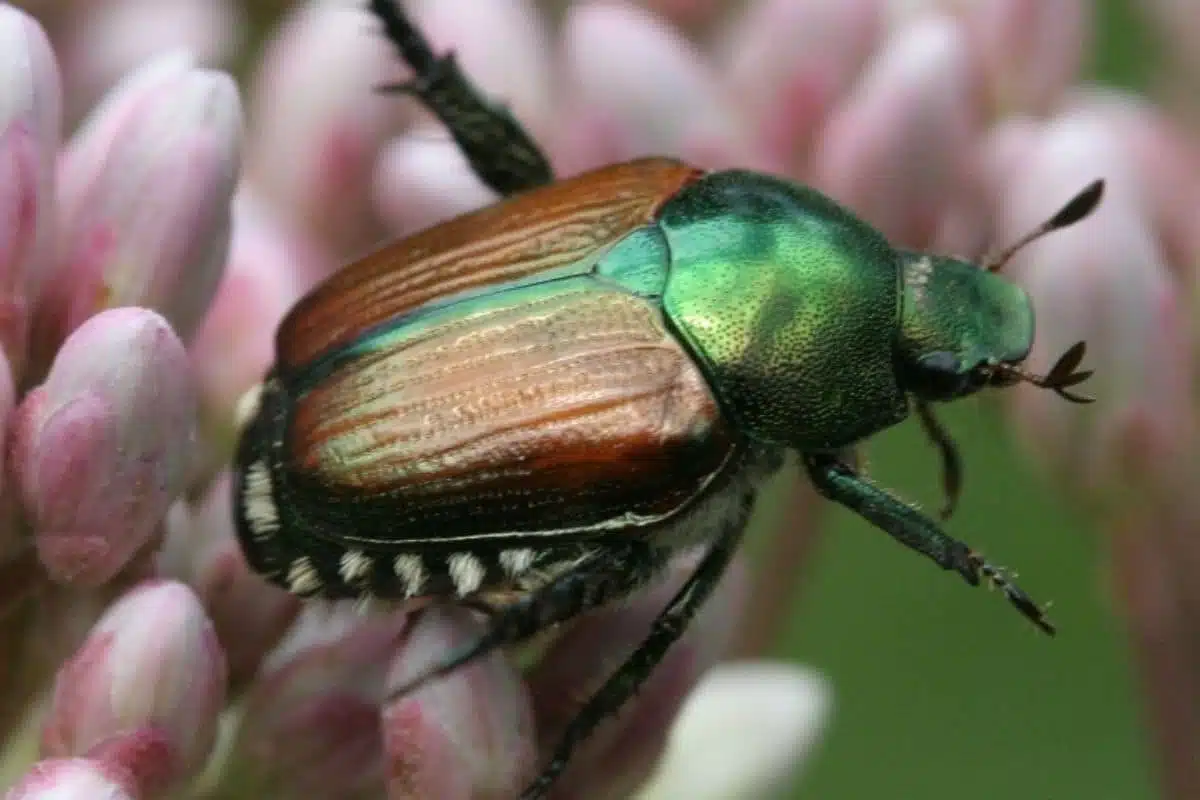
Adult beetles are around 1 cm long, with a rounded oval shape and a hard shiny green exoskeleton and brown wing covers. The best defining characteristic of this beetle is the six tufts of white hairs running down each side of the abdomen – no other beetle in BC has this pattern.
Refer to the Japanese Beetle Look-alikes Factsheet to compare the Japanese beetle with similar looking insects found in BC.
Take Action
Report all suspect Japanese beetles to CFIA by calling 604-292-5742 or email BCPF.Japanese.beetle@inspection.gc.ca.
Please submit reports with insect photos and an accurate location when possible.
REPORT TO PROTECT BC’S BIODIVERSITY
You can now submit sightings, feeding damage, or damaged trap reports through the free Survey123 community science app in addition to using the Report Invasives app or filling out the form below. Data is sent directly to the CFIA Japanese beetle response team – no separate email is needed.
How to Use Survey123:

- Download ArcGIS Survey123 from the Apple App Store or Google Play.
- Scan the QR code with your phone’s camera to open the app.

- Select Continue without signing in (no account needed).
- The Japanese Beetle Community Science Form will open for you to enter your observations.

prevention tips
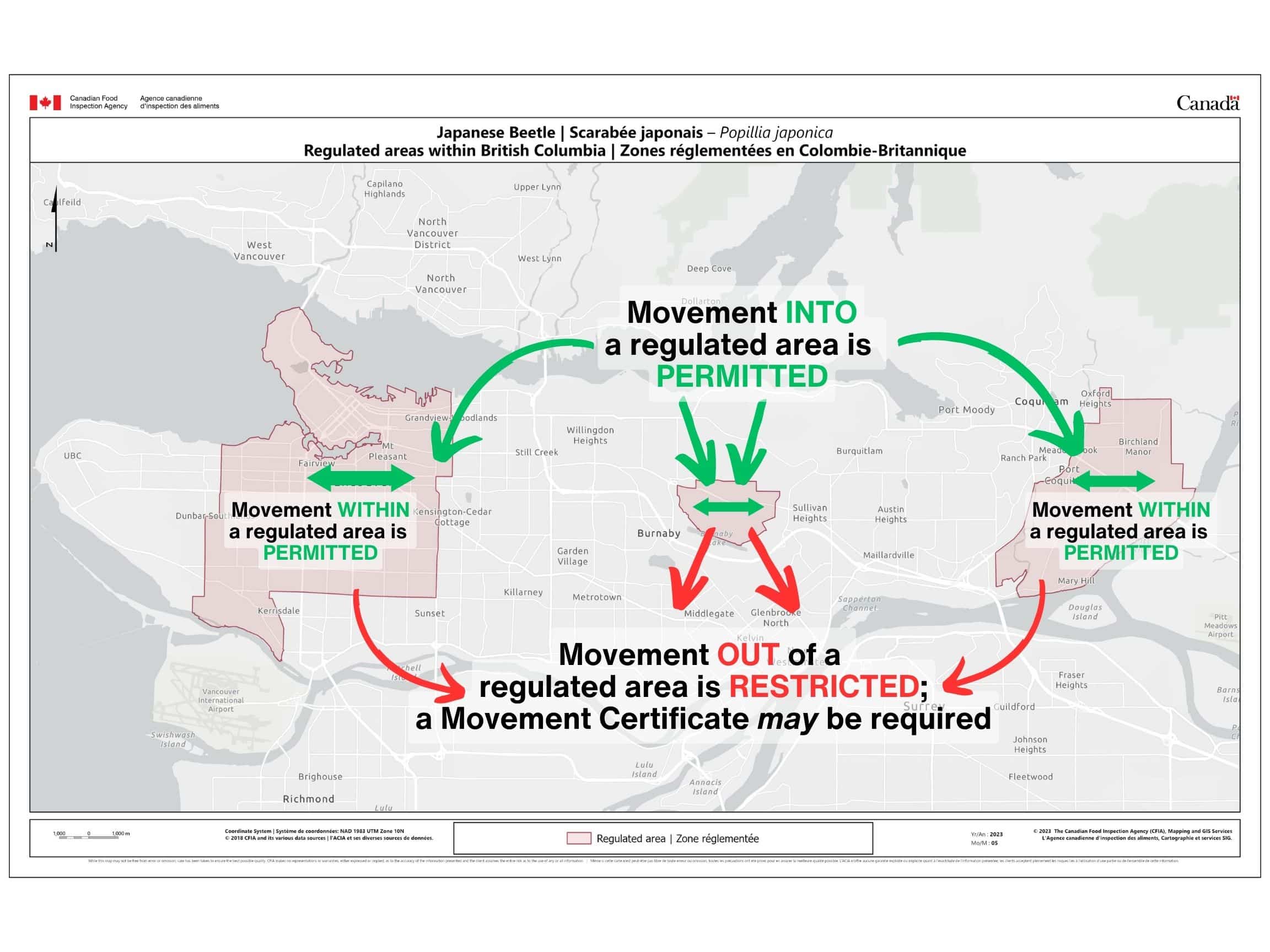
To reduce the risk of human-assisted movement of Japanese beetle, the Canadian Food Inspection Agency (CFIA) implements movement control restrictions to prohibit the movement of potentially infested soil and plant material from leaving the regulated area. As the movement of plants with soil, soil-related matter and/or growing media attached is the most high-risk way Japanese beetle spreads to new locations, and limiting movement reduces the risk of spread. Restrictions only apply to the movement of plants with soil or soil-related material attached, which is restricted year-round. Please see the following table for more information on how these restrictions have changed between 2022 and 2023.
2022 regulated materials
- Movement of plants with soil attached restricted year-round
- Movement of soil out of a Japanese beetle regulated area restricted year-round
- Movement of plants and plant parts with no soil attached out of a Japanese beetle regulated area restricted between June 15 and October 15
2023 regulated materials
- Movement of plants with soil, soil-related matter and/or growing media attached restricted year-round

If you live within a regulated area in the Cities of Burnaby, Port Coquitlam, Vancouver, or may be located in a treatment area. If you would like to learn more about having your private property treated, please see the province’s JB webpage or contact AgriServiceBC@gov.bc.ca.
For current information on the Cooperative Japanese Beetle Program, please visit the following partner websites:
Canadian Food Inspection Agency (CFIA)
BC Ministry of Agriculture and Food (BC MAF)
BC Landscape and Nursery Association (BCLNA)
REPORT TO PROTECT BC’S BIODIVERSITY

Use the app
Observe and report to protect BC’s biodiversity

Report through this website
Use our form to tell us what you’re seeing and where.


